
Electric bikes have rapidly established themselves as the future of European green mobility. However, as motor power and battery technology have surged, riders across the EU frequently ask: What are the legal speed limits? Do I need a driver's license or insurance? And where can I legally ride high-performance 750W to 2000W electric bikes?
Navigating European e-bike regulations can seem complicated because rules distinguish between public street-legal pedelecs, speed pedelecs, and high-powered off-road machines. In this guide, we break down the electric bike laws in Europe so you can ride safely, legally, and with total peace of mind.
1. The European Pedelec Baseline: Standard EN 15194
Across all European Union member states (and the UK), standard electric bicycles are legally classified as standard acoustic bicycles (EPAC - Electrically Power Assisted Cycles) under standard EN 15194. To qualify as a standard pedelec that can be ridden anywhere a normal bicycle is permitted, the bike must meet three core criteria:
- Motor Power Limit: The electric motor must have a maximum continuous rated output of 250 Watts.
- Pedal Assistance Only: Motor power must be activated by pedaling (via a cadence or torque sensor). The motor must cut off completely when the rider stops pedaling.
- Speed Assist Cutoff: Electrical assistance must progressively decrease and completely cut off when the bike reaches 25 km/h (15.5 mph). You can ride faster using muscle power or descending hills, but the motor cannot assist past 25 km/h.
Privileges of standard pedelecs: No driver's license required, no vehicle registration or license plate, no compulsory motor vehicle insurance, and full access to public bike paths and roads.
2. What Is the Law on Throttles in Europe?
One of the most frequently asked questions concerns twist throttles and thumb throttles:
- Walk-Assist Throttles (Legal on Streets): Throttles that propel the bike without pedaling up to 6 km/h (3.7 mph) are 100% legal on public roads in Europe. This feature helps riders push a heavy bike up a steep pedestrian ramp or start moving from a standstill at a red light.
- Full-Speed Throttles (Off-Road / Private Land): Throttles that propel the bike beyond 6 km/h without pedaling are classified for private land, private trails, or as motorized mopeds/L1e vehicles on public roads.
3. Speed Pedelecs (L1e-B Category / S-Pedelecs)
Electric bikes that provide pedal assistance up to 45 km/h (28 mph) with motors up to 4,000 Watts fall under the EU vehicle category L1e-B (mopeds):
- Registration: Must have a Certificate of Conformity (CoC) and carry a small moped license plate.
- Driver's License: An AM or standard car driver's license (category B) is required.
- Safety Equipment: Certified moped helmets, rear-view mirrors, and permanent daytime running lights are mandatory.
- Bike Path Restrictions: In countries like Germany and the Netherlands, S-Pedelecs must generally ride on the road with cars, not on dedicated pedestrian/cycle paths.
4. High-Power E-Bikes (750W, 1000W, 2000W AWD): Where Can You Ride?
Popular adventure bikes—such as the RIDSTAR Q20 Pro (2000W dual motor) or extreme off-road models in our electric motorcycle category—deliver extraordinary power, speeds exceeding 50 km/h, and pure-electric throttle modes.
Where are these high-performance machines legal to ride in Europe?
- Private Land & Private Property: Completely legal with no speed or wattage restrictions. Ideal for large private estates, farmland, forestry work, and holiday properties.
- Designated Off-Road Trails & Bike Parks: Many private mountain bike parks, motocross circuits, and off-road tracks welcome high-powered e-bikes.
- Dual-Mode Limiters: Many riders take advantage of smart display settings that allow toggling a 25 km/h speed limiter when commuting through urban public zones, while unlocking full motor power when arriving on private adventure trails.
5. Country-by-Country Nuances in the EU
- Germany: Strict enforcement of the 250W / 25 km/h rule on public roads. Helmets are strongly recommended for pedelecs and mandatory for S-pedelecs.
- France: Severe fines for riding illegally chipped or de-restricted bikes on public roads. Standard pedelecs do not require a license or insurance.
- Spain & Italy: Throttles exceeding 6 km/h without pedaling are classified as mopeds on public streets. Helmets are mandatory in Spain outside urban areas.
- Netherlands: World-class cycling infrastructure. Strict division between bike lanes (for 25 km/h pedelecs) and roadways (for 45 km/h S-Pedelecs).
6. Summary Checklist for Buyers
When selecting your next electric bike, choose according to your intended usage:
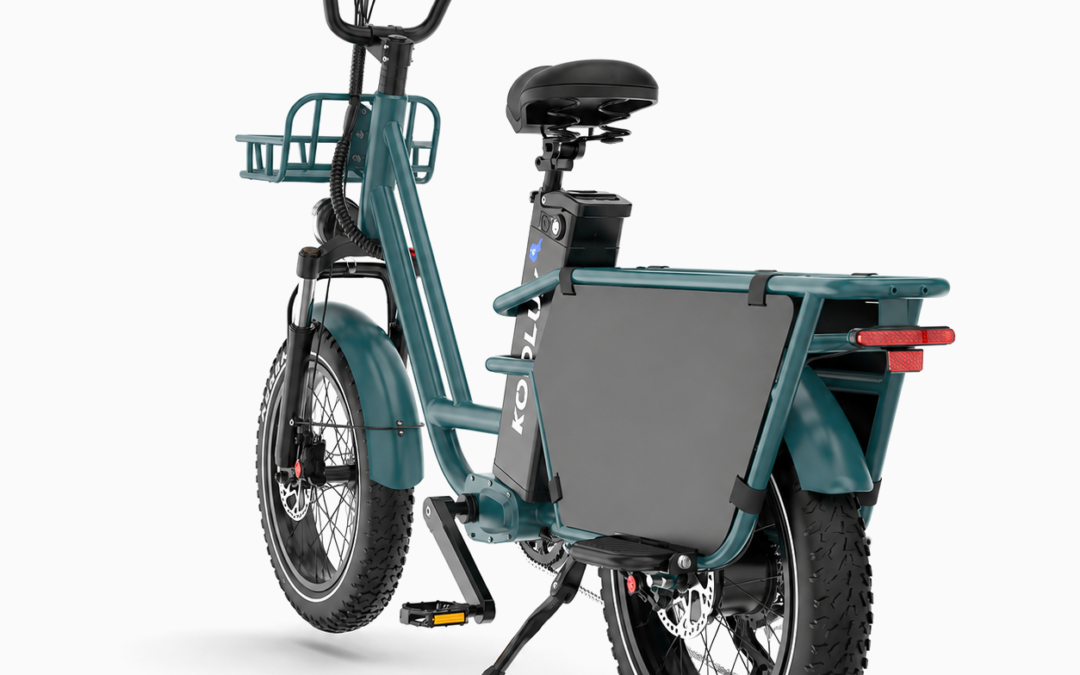
- For 100% road-compliant commuting, city deliveries, and zero legal paperwork: Look for models like the KOOLUX X7 Pro with pedal-assist compliance.
- For maximum adrenaline, steep off-road climbs, snow, and private trail exploration: The RIDSTAR Q20 Pro delivers unmatched power and dual-motor AWD capability.
Frequently Asked Questions
Do I need to wear a helmet when riding an electric bike in the EU?
For standard 25 km/h pedelecs, bicycle helmets are recommended but not legally compulsory for adults in most EU countries (though mandatory for children under 12–16 depending on the country). For speed pedelecs (45 km/h), certified helmets (standard NTA 8776 or motorcycle helmets) are strictly mandatory.
Can I take my electric bike on trains and public transit in Europe?
Yes! Most national railway operators (DB in Germany, SNCF in France, NS in Netherlands) permit standard and folding e-bikes on regional and long-distance trains, usually requiring a standard bicycle supplement ticket during peak hours.
Have specific questions about compliance or choosing the right bike? Explore our full collection of Electric Bikes or contact our support team today!
 English
 Español
 Italiano
 Deutsch